
George Municipality official recognised for Best Paper at SARPA Convention
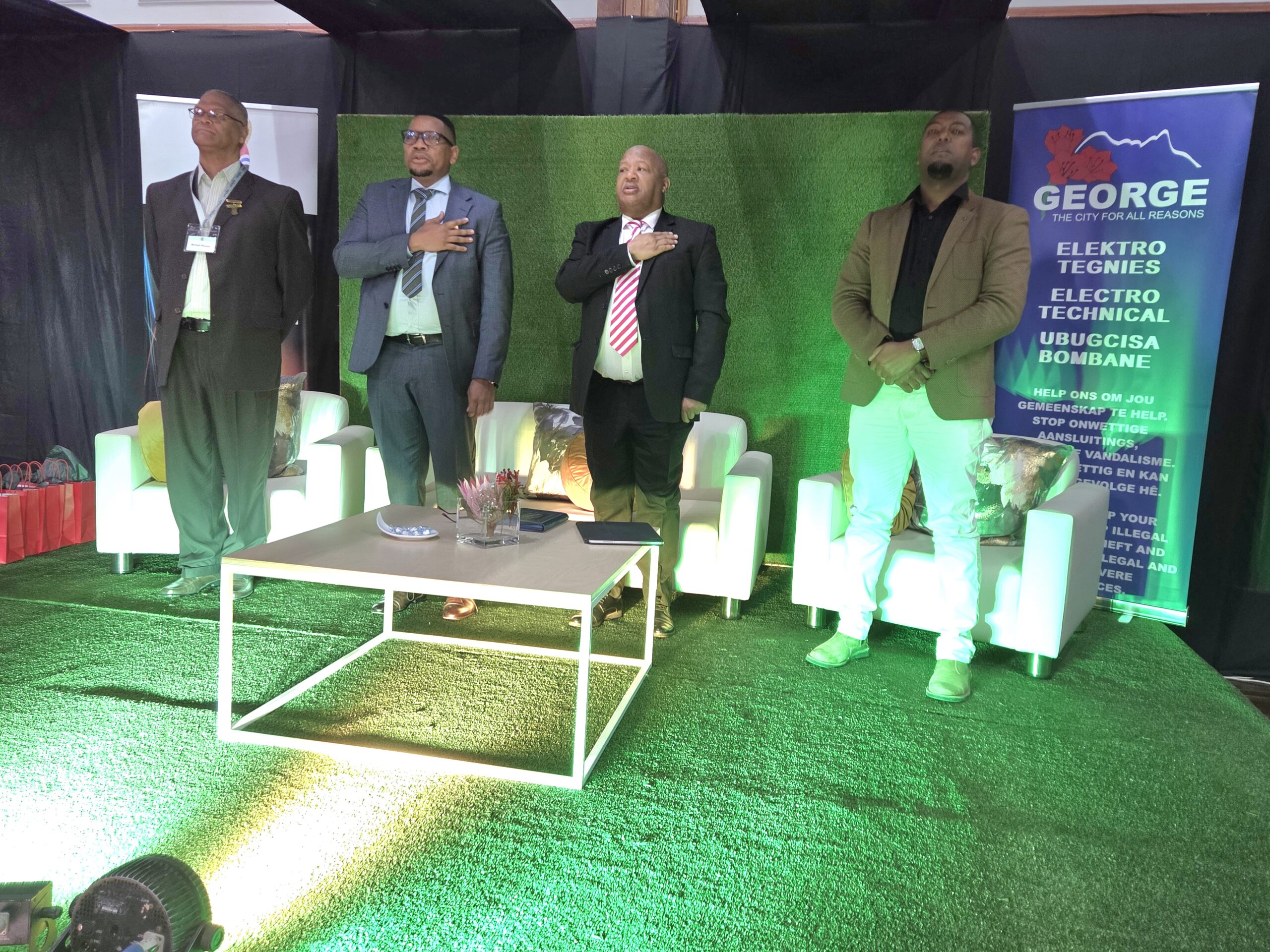
In the photo above, Speakers at the the event are from left, Michael Rhode, Director of Electrical Engineering Services, George Municipality, Kenneth Samolapo, SARPA President, Dr Kosie Haarhoff, Acting Director: Community Services, George Municipality and Ald Browen Johnson, Executive Mayor of George singing the national anthem at the 2026 Southern African Revenue Protection Association (SARPA) Convention, held in George from 20 to 21 August.
George Municipality official Edward Nqumse received the Best Paper award at the 2026 Southern African Revenue Protection Association (SARPA) Convention, held in George from 20 to 21 August.
Nqumse was recognised for his presentation, “Case Study of Best Practices to Combat Essential Infrastructure Crimes in George Municipality”, which shared the municipality’s approach to combating infrastructure-related crime and protecting essential services and municipal revenue.
The award was a highlight of the two-day convention, hosted by George Municipality and attended by municipal leaders, revenue protection practitioners, technical experts, business representatives and delegates from South Africa and abroad.
Held under the theme “Protecting Revenue in a Changing Landscape: Balancing Enforcement and Equity through Change Management, Innovation and Consequence Management”, the convention focused on the growing pressures facing municipal revenue and the need for municipalities to adapt to a changing energy, water and technology landscape.
The keynote address by Lerato Phasha of the South African Local Government Association (SALGA) highlighted the financial pressures facing municipalities, including declining collection rates, consumer debt, inaccurate billing, infrastructure failures, electricity and water losses, illegal connections and increasing costs associated with infrastructure theft and vandalism.
Phasha said reforms in the electricity, water and local government sectors presented both opportunities and risks for municipalities. While municipalities have opportunities to modernise their systems, introduce new technologies and diversify their revenue sources, traditional revenue streams are increasingly under pressure.
The growing use of rooftop solar, embedded generation and energy efficiency, is changing the municipal electricity environment, while water losses, ageing infrastructure, theft, vandalism and affordability pressures continue to affect water revenue.
Phasha emphasised that revenue protection must become a strategic priority, with municipalities investing in smart metering, advanced metering infrastructure, data analytics, customer database verification and stronger enforcement.
Furthermore, she highlighted the importance of revenue certainty – the ability of a municipality to accurately measure, bill, collect and forecast its revenue. This is essential for financial sustainability and can influence a municipality’s ability to access infrastructure financing and attract investment.
George Municipality used the convention to share practical examples of how it is responding to these challenges.
Three municipal presentations formed part of the programme, covering smart metering implementation by Jemaine Cupido, Manager Energy Security, the Digital Water Network Twin by SP Van Zyl GLS Consulting – Water Services Department and best practices in combating essential infrastructure crime Edward Nqumse, Superintendent Illegal Connections.
Other sessions focused on revenue protection best practices, power quality monitoring, digital revenue recovery, change management, smart water meter deployment and innovative approaches to combating cable theft.
The programme also explored how municipalities can balance enforcement with equity while using technology to improve revenue collection and reduce losses.
George Municipality has already begun adapting to changes in the energy environment through initiatives including wheeling agreements and Independent Power Producer (IPP) arrangements. The municipality has entered into a three-year IPP agreement expected to generate savings on bulk electricity purchases and is working towards a 20MW IPP contract. These initiatives form part of the municipality’s broader efforts to manage resources responsibly, strengthen financial sustainability and ensure that municipal services remain viable in a changing environment.
The theft and vandalism of essential infrastructure was a recurring theme during the convention.
Damage to electricity infrastructure and other municipal assets can interrupt services to communities while placing additional financial pressure on municipalities.
SARPA President Kenneth Samolapo said revenue protection was no longer simply a matter of collecting money, but was closely linked to protecting infrastructure, maintaining services and ensuring the sustainability of municipalities.
SARPA also highlighted its involvement in efforts to strengthen the response to infrastructure-related crimes, including collaboration with organisations such as SALGA, the Association of Municipal Electricity Undertakings (AMEU), CIGFARO, National and Provincial Treasury and the Department of Cooperative Governance and Traditional Affairs (COGTA).
The convention marked an important milestone in SARPA’s professionalisation programme.
The association introduced a structured professional designation pathway for revenue protection practitioners, ranging from Junior Revenue Protection Officer through to Master Revenue Protection Officer.
The designations recognise increasing levels of competence, experience and contribution to the profession and are supported by continuous professional development requirements.
The initiative supports the broader professionalisation of the public sector and aims to strengthen revenue protection as a specialised professional field.
A strong message emerging from the convention was that municipalities cannot rely solely on traditional revenue streams as the operating environment changes.
Potential opportunities discussed included renewable energy, electricity wheeling, telecommunications infrastructure, property development, land value capture and green finance.
At the same time, municipalities need to focus on improving collection rates, reducing non-revenue water and electricity losses, maintaining infrastructure, strengthening financial controls and supporting local economic growth.
George Executive Mayor, Ald Browen Johnson, welcomed delegates to the city and said the convention provided an important platform for municipalities to share practical solutions to the challenges created by growth and a changing operating environment.
“George is a city that continues to grow. Our population has increased significantly over the years, bringing with it greater demand for housing, infrastructure, electricity, water, roads and other essential municipal services,” said Mayor Johnson.
He said the municipality wanted George to become a smarter city in the Garden Route that embraces innovation and responds practically to the challenges of a growing population and changing environment.
The convention brought together local and international expertise, including a contribution from the UK Revenue Protection Association, and provided an opportunity for delegates to exchange knowledge and experiences.
The overall message was clear: protecting municipal revenue is fundamental to ensuring sustainable service delivery.
Photos:
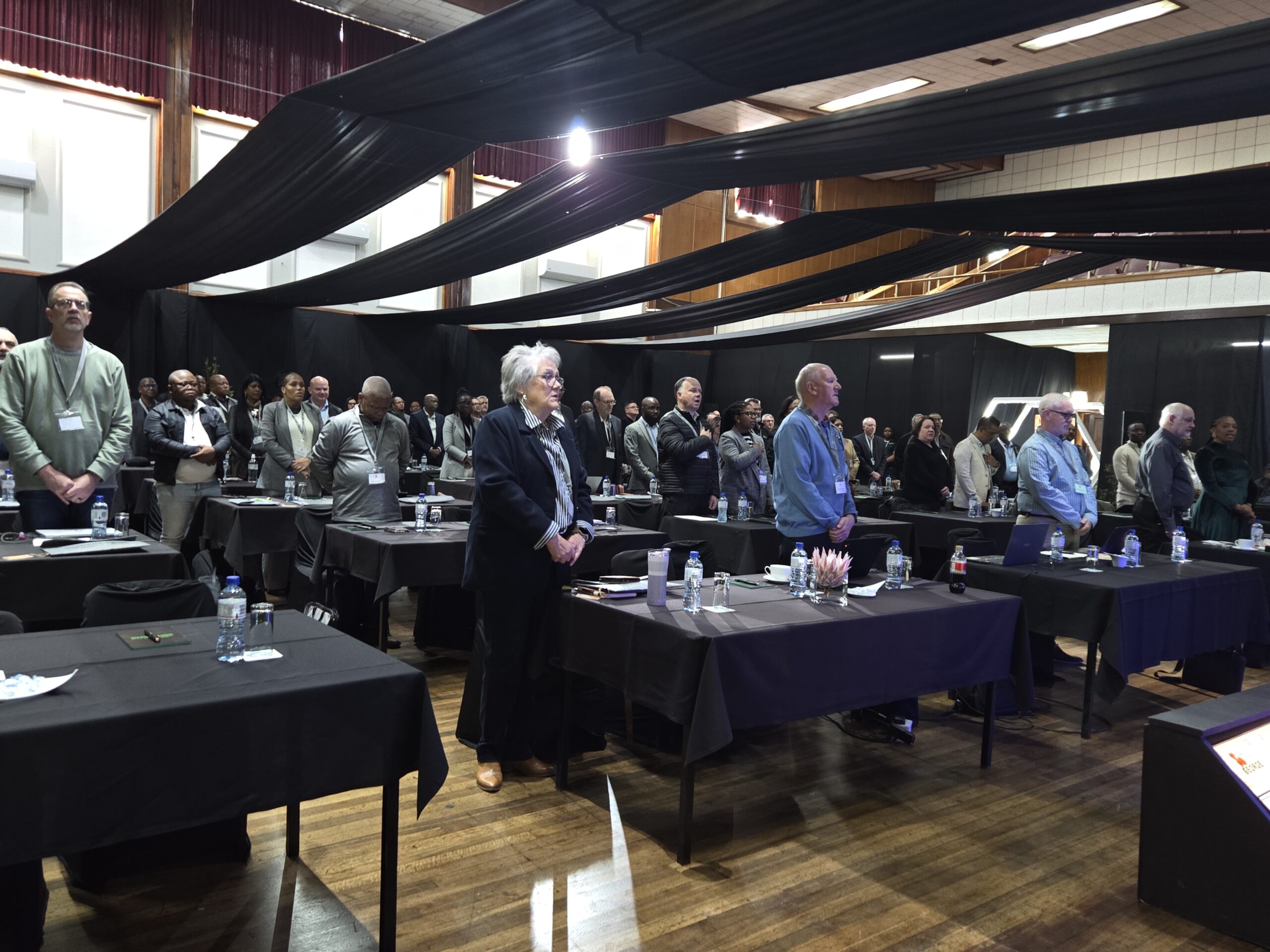
A view of the attendees standing to observe the national anthem.
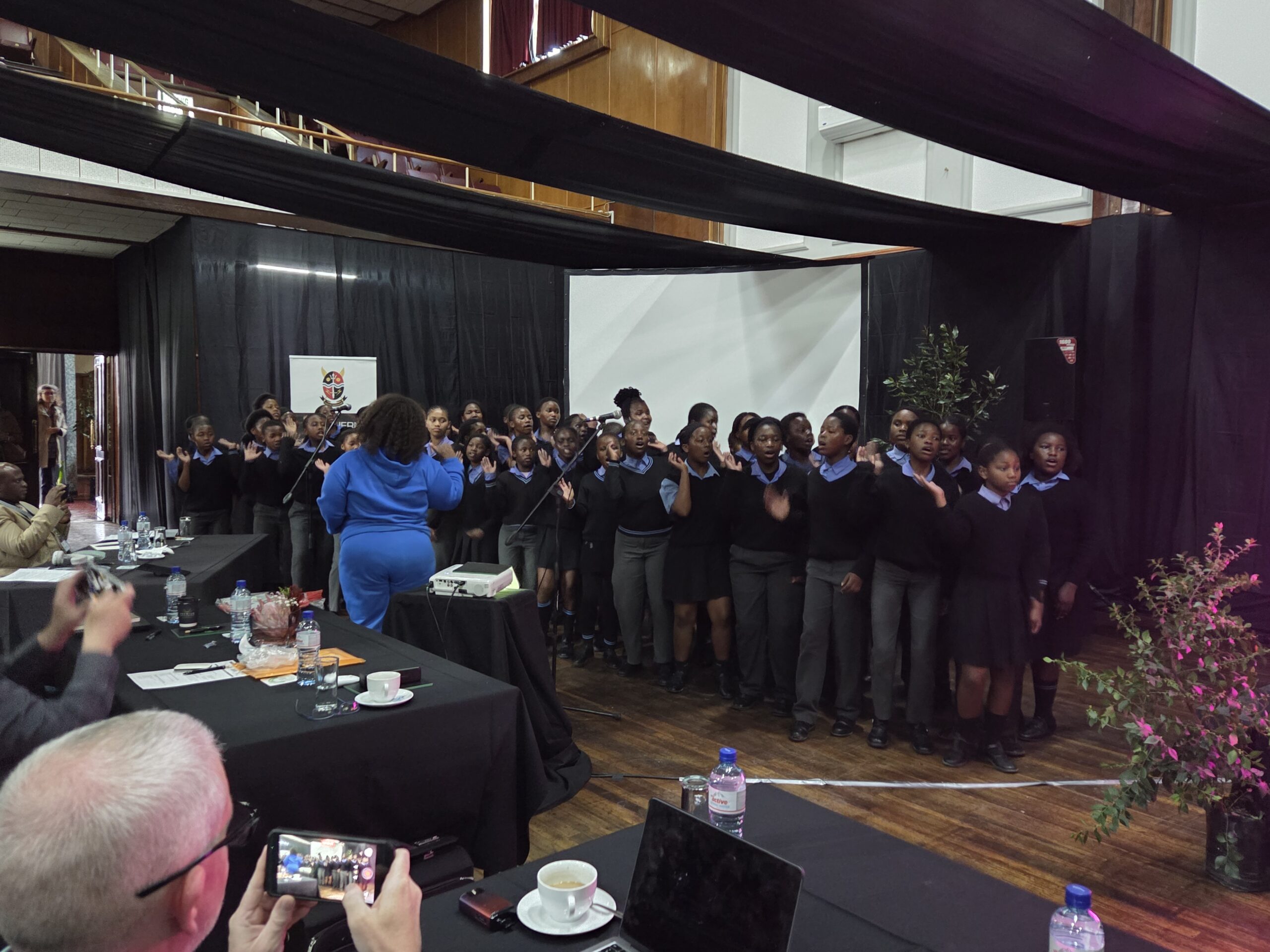
Thembalethu Primary School choir entertained the attendees at the SARPA convention
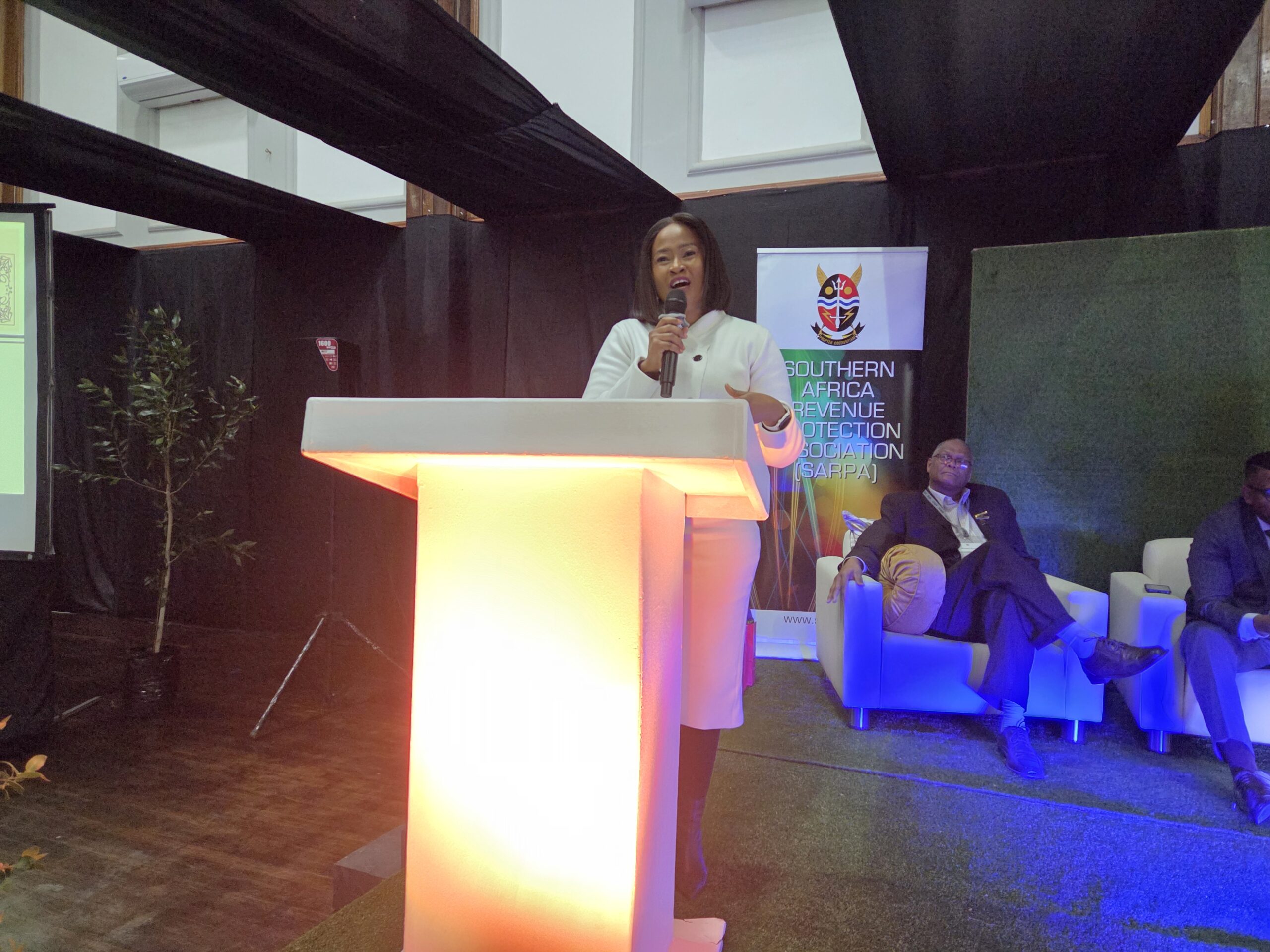
Lerato Phasha, Portfolio Head for Municipal Finance, Fiscal Policy and Revenue Enhancement at the South African Local Government Association (SALGA) delivered the keynote address at the convention.
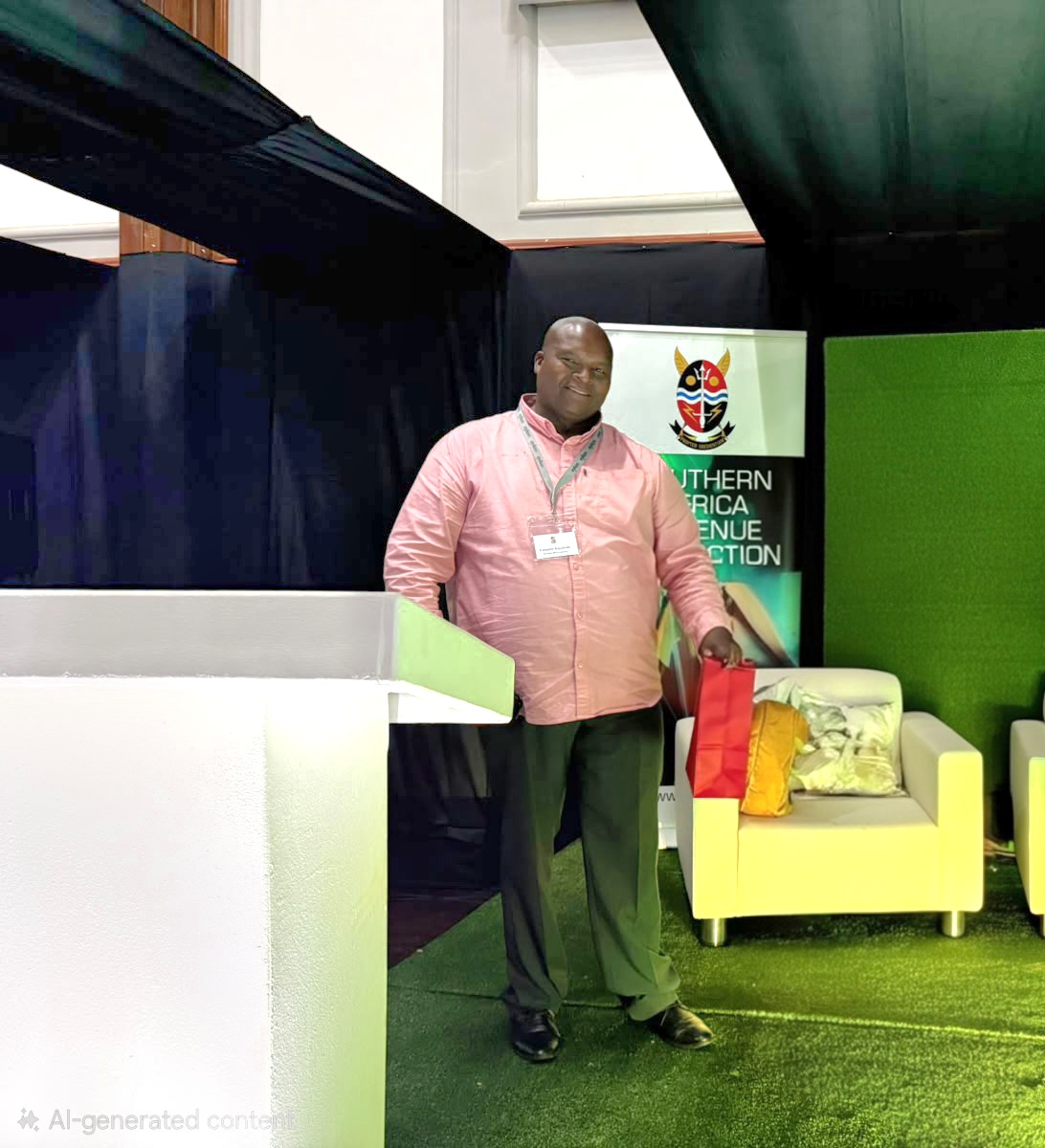
Edward Nqumse, Superintendent Illegal Connection received the Best Paper award at the Convention.