George and surrounds have once again experienced a bumper festive season showing a distinct increase in accommodation bookings, restaurant and activity visits, shopping, traffic, and more. One local activity reported as many as 6 200 visitors on one day, while a local restaurant accommodated 1 000 covers in one day.
Executive Mayor for George, Leon Van Wyk noted that informal discussions held with restaurants and local business indicate a bumper season with at least a 30% increase in turnover. “By all accounts, George has experienced a very busy holiday season with some businesses recording new turnover and attendance records and improvements returning to and exceeding pre-Covid levels. These achievements should assist in stabilising employment levels as we continue to focus on growing our tourism sector and adding events to extend the offering well beyond the traditional summer season.”

Events including the George Tens held over four days from 15 December, theatre productions, markets, and concerts right up to the new year were well attended. Our tourism offices recorded 398 enquiries received at the George and Wilderness Tourism offices during December 2022. Although this is less than those received last year, considering the increased accommodation occupancies, this indicates that accommodation and activity planning was done well in advance for 2022, and not at the last minute, as was experienced last season. This returns us to more normal trends. The tourism section distributed QR codes to establishments to enable speedy digital access to information for visitors to the area. This was also advertised on all social media platforms and through the local print media.
69% of enquiries were related to Things to do and general tourism information, 20% were accommodation related and 11% were general enquiries, not particularly related to tourism, but looking for estate agents, etc. Occupancy figures in Quarter 4 2022 (Oct, Nov) increased by 24% from Quarter 4 2021 (Oct, Nov). Preliminary feedback is that the private sector has experienced a bumper festive season, with many establishments still being too busy to share their stats with our office. Accommodation establishments remain quite busy, and it is likely that the season will be extended considerably with international visitors returning to our area over the next few months.
PAVEMENT PERMITS
In a bid to boost the local economy, the Municipality repeated last year’s initiative of a ‘pavement permit’ to assist restaurants in terms of capacity constraints with the implementation of social distancing measures due to COVID-19. The ‘pavement permit’ would provide restaurants with additional floor space to place their tables. The initiative was very well-received by local businesses although no applications were received.

SAFE SEASON
The multi-stakeholder Festive Season Monitoring Committee met daily from the 1 December and held its final meeting on 9 January 2023. A debriefing will be held to review and begin planning for the 2023 Festive Season.
The daily committee meeting was attended by municipal as well as external stakeholders such as NSRI, SAPS, SANParks and others. The purpose of the daily meeting is to assess available resources, identify possible risks and to put in place actions plans to address these risks so as not to impact on our holidaymakers. The municipality’s goal is to ensure consistent service delivery during this busy period and to keep George running as efficiently as possible.
A new safety initiative launched was the use of QR codes (widely publicized) that provided public with quick and easy access to websites containing information on tourist activities and events, important municipal contact details as well as water and other safety tips for our visitors.
Links to relevant sites:
https://www.george.gov.za/planning-development/local-economic-development/tourism/safety-for-visitors/
https://www.george.gov.za/contact/
http://www.visitgeorge.co.za/
Positive feedback has been received from residents, businesses and visitors on the season management:
“I am hugely grateful to the George Municipality, Law Enforcement, traffic officials, monitors, NSRI security companies and SANParks for the enormous difference they made in our village this past season. One felt safe, looked after and protected on so many levels during what can only be described as a bumper season. Our village was swamped with visitors and I believe that we showed how things can be done.”
”Our children have been visiting from Cape Town, and have been so impressed by the beach monitors, helpful traffic cops and general cleanliness.”
“Please convey our compliments to George Municipality on their excellent strategies they put in place to manage the influx of holidaymakers. Well done!!!”
STAKEHOLDER COLLABORATION
The Festive Season Monitoring Committee and operations over the festive season were undertaken in collaboration with SANParks and NSRI Wilderness. Jonathan Britton, Acting Park Manager for the Wilderness National Park expressed his gratitude to all staff, municipal and otherwise who worked long hours over the season.

“The Wilderness National Park and surrounding ecological and environmental assets is interwoven with the urban infrastructure of Wilderness and this combination of natural, social and economic systems is a complex interaction and requires a collaborative and integrated approach between various organisations to make it all work together.
The influx of visitors to the Garden Route during the summer holidays is an important boost for the local economy but requires planning and deployment of resources in an integrated and co-ordinated manner between various role players to ensure that local systems can manage the additional pressure. Building on the success of the previous year, the George Municipality continued to lead a multi stakeholder collaborative approach to ensure high standard of service delivery in and around Wilderness.
Daily presence of lifeguards, Traffic Officials, Law Enforcement officials, cleaning steams and SANParks staff were a common sight in Wilderness all working together ensuring a safe and environment for all. Impactful leadership and a hands-on approach were the order of the day with senior managers and directors meeting daily and overseeing the implementation of operational plans. This holiday season again proved the value of partnerships, dedication, and teamwork.”
Michael Vonk, CEO of George Regional Hospital and Station Commander for National Sea Rescue Institute (NSRI) Station 23 lauded the successful management of this past festive season, which was one of the busiest in recent years. He did however qualify that a measured response should be adopted to the success of the season, as we did experience three fatal drownings, two at Wilderness Beach and one at Victoria Bay and a number of non-fatal drowning incidents. We extend our sincere condolences to the families of those who lost loved ones.
“The close collaboration, teamwork and partnerships between all role players to ensure the necessary preventative measures were in place, along with a coordinated emergency response were extremely effective to limit the number of serious incidents on our beaches. In particular, the lifeguards should be recognised for their effort in preventing more drownings.”
EMERGENCY SERVICES
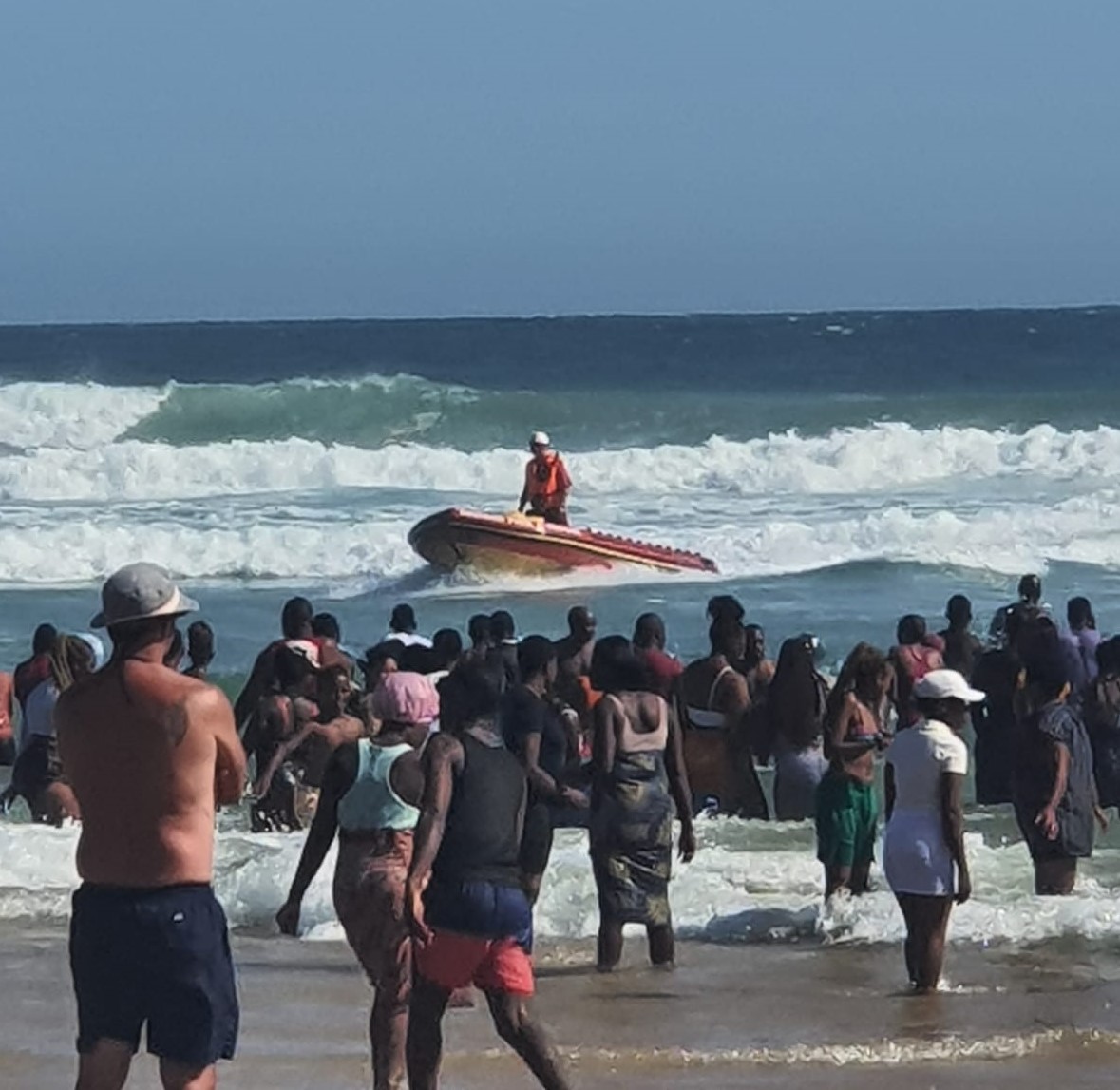
Lifeguards were deployed at Gwaing Beach, Herold’s Bay, Victoria Bay, Wilderness Leentjiesklip, Steps, Wilderness Main and Conville Public Swimming Pool on a full-time daily basis from 7am – 7pm and will remain in place until 31 January 2023 at the Blue Flag Beaches (Herold’s Bay, Victoria Bay and Wilderness Main). A total of 3 drownings, 35 rescues, 66 help outs, 66 First Aid incidents, 336 Bluebottle stings and 8 Emergency Medical Assistance were undertaken by the team of Lifeguards, NSRI and emergency personnel at the various beaches.
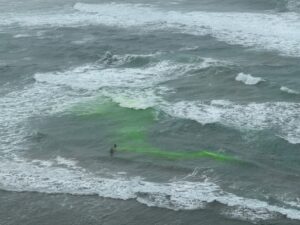
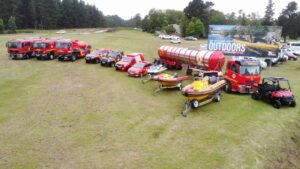
The newly acquired Jet rib, a 1800cc jet ski built into a rubber duck pontoon structure proved invaluable this season and a huge asset to the summer safety measures. The mobile JOC was deployed for 10 days of high season and the Fire Brigade drone was used to survey sea conditions, for shark spotting , searching of missing persons and during rescue operations once again showing the value of expenditure on technology to aid in safety measures.
Emergency Services were kept busy and attended to 8 formal structure fires and 23 informal structure fires. Regrettably, two lives were lost in the informal structure fires. Fire officials also attended to 59 veld fires, 2 building fires, 4 motor vehicle fires, 47 motor vehicle incidents, 32 other emergency incidents, 4 drownings and 23 false alarms.
TRAFFIC MANAGEMENT / PARKING / POINT DUTY
George Traffic Services actively patrolled all municipal areas in collaboration with Western Cape Provincial Traffic including participating in regular vehicle check points focussing on drunk driving, vehicle and driver fitness. Traffic flow was managed as best possible in particular at congested intersections such as the N2/Victoria Bay, Garden Route Mall, the exit ramp to Mossel Bay on Knysna Road, N2/Station Road (Wilderness), N2/Caltex (Wilderness), N2/Sanparks and N2/Salinas.
Temporary road signs and traffic cones were placed at dangerous locations to ensure compliance (prevention of illegal parking/obstruction/encroachment on roadways) causing danger to other road users. To ease traffic flow, each beach had an area demarcated for Drop and Go. Staff deployed over this period at beaches were 8 traffic wardens and 20 EPWP staff assisting with Drop and Go, monitoring and enforcement of parking, road closures and directing motorists to suitable parking locations.
Aside from the beaches and high-pressured traffic points attended to throughout the city, traffic officials assisted with 12 funeral escorts as well as traffic control at various events including the Christmas Lights Festival, George Tens, Palm Tyres 21km race etc. 43 vehicle accidents were attended to without recorded injuries, 10 with injuries and three with fatalities. 322 notices for a variety of traffic and vehicle offences were issued, 32 impoundments and fine collection totalling R70 000 was brought in.
The Vehicle Testing Station offered 3 days in December where a free 10 Point check could be done on your vehicle before traveling. This is the second year the service was offered and 40 motorists took advantage of it. The same service will be offered 10 – 13 January 2023, 08h30 – 15h30 (VTS, Hibernia Street).
BLUE FLAG BEACHES AND CLEANSING
Wilderness, Main Beach and Herold’s Bay Beach remain full Blue Flag beaches until 31 January 2023, and Victoria Bay retains Pilot Blue Flag status. Compliance is required in terms of the international standards, which includes high standards of water quality monitoring, public safety, lifeguard services and well-maintained coastal amenities.
Oil spills consisting of hydrocarbon, low-sulphur oil droplets were found on several beaches along the Garden Route in early December with a multi-agency command centre established to resolve the issue. There have been no reports linking the oil spill to humans, birds, or marine life and all affected George beaches were declared green status (i.e., monitored and open for use) by 8th December 2022. George Municipal cleaning teams together with Working for the Coast teams, worked non-stop for days to clear Herold’s Bay, Victoria Bay, Ballot’s Bay, Wilderness beach from Leentjiesklip to Salina’s beach, Gwaiing Beach, and Kaaimans mouth.

Municipal beach cleaning teams started working at 06:00 until 21h00 on many nights and started at 04h00 on New Year’s Day to ensure that the beaches were clean for the first beachgoers the next morning. The cleaning teams also did sterling work in keeping the beach ablution facilities in excellent condition despite heavy usage. Our CBD cleansing teams kept the town clean and neat for visitors.
BEACH MONITORS, LAW ENFORCEMENT AND ANTI-LAND INVASION OFFICIALS
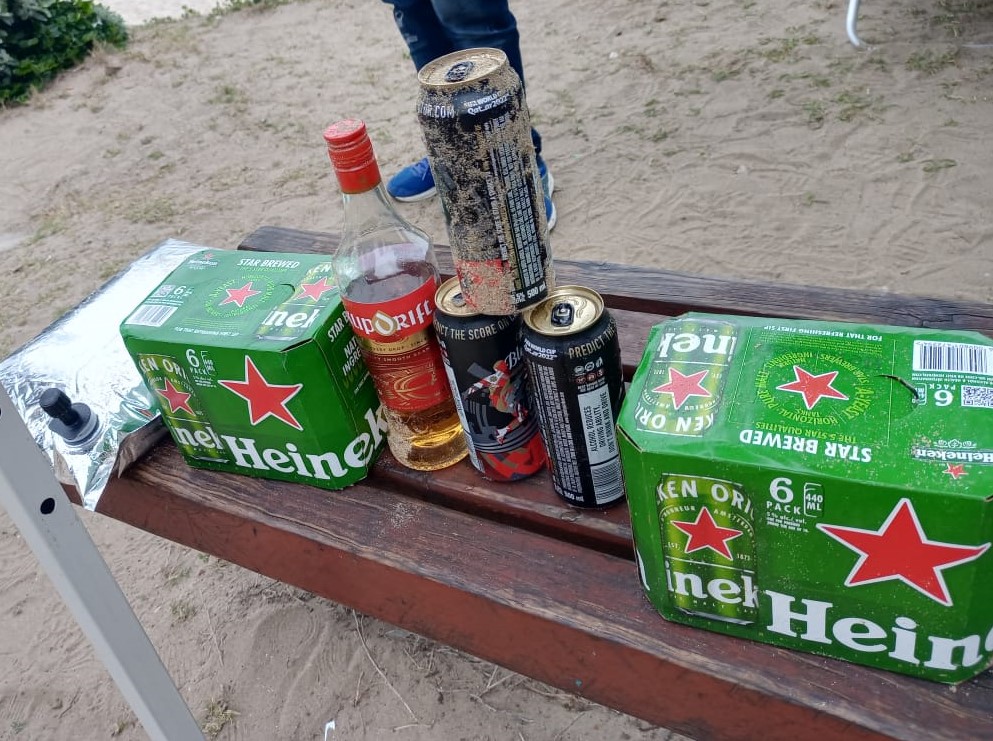
George Municipality was adamant that no alcohol would be allowed on our beaches and confiscated 317 litres of alcohol with a retail value of approximately R21 110 from the start of the festive season. Neighborhood Watches, Community Police Forums as well as the SAPS worked closely with the Municipality with regards to Community Safety. The confiscated alcohol will be handed over to SAPS for disposal.
The department of Forensic Pathology Services for George assisted by the Community Police forum, SANParks, George Law Enforcement, Neighbourhood Watch and Bambanani members at the Wilderness and LeentjiesKlip beach areas handed out 8000 orange and yellow armbands to children. The yellow and orange armbands are written up with the parent or caregivers name and contact details and recorded in a register to assist in the event of them being separated from their parents or caregivers. Two children were reunited with their families using this system at Wilderness Lagoon.

FIREWORKS
George Municipality continued to implement a complete ban on the setting off of fireworks, firecrackers, flares, paper lanterns, and other such paraphernalia in the George municipal area. Over 292 visits were undertaken to a variety of retail outlets and an estimated R4500 worth of fireworks was confiscated (retail value) with fines issued totalling R14 500. It is encouraging to see that the value of fines and confiscations has declined on last year and we thank those retail outlets who have adhered to the applicable regulations.
MUNICIPAL OFFICES REMAINED OPEN – SERVICE DELIVERY ONGOING
The municipal offices were only closed on the Public Holidays and for a few days after the 27th December following a burst pipe which caused extensive water damage to the third, second and first floor of the main building in York Street.
Our Planning division processed 309 building plans in-season with 113 approved, which was 104 residential, 9 non-residential. 144 applications (124 residential and 20 non-residential) remain in circulation. A total of 196 (170 residential and 26 non-residential) were not approved due to either not complying and/or additional information being required. A total of 46 (44 residential and 2 non-residential) Certificates of Occupancy were issued. Furthermore, a total of 106 Building Control related inspections were conducted. These include 13 commencement inspections, 12 drainage inspections and 81 completion inspections.
The Building Control division was equally busy with building control contraventions and complaints that were able to be addressed expeditiously over the festive season. A total 35 complaints were received and attended to.
Our human settlements division dealt with the aftermath of several fires which took place in December with a large incident totalling 20 informal housefire cases in Edameni reported on 10 December 2022. All 20 families lost their structures with belongings during this incident. Temporary accommodation was given to the 20 families at the All-brick Community Hall. The municipal Social Services division assisted those affected with mattresses, blankets, food and other items. Assistance was given to four families who accepted second hand building material. Another five families have been prioritised and will receive assistance soon. The remaining families must still provide the balance of documentation required for assistance in terms of the approved Emergency Accommodation and Assistance Policy.
Two BNG (Breaking New Ground) houses affected by fires will be investigated where after an application in terms of the Emergency Housing Programme will be submitted to the Western Cape Provincial Department of Human Settlements.





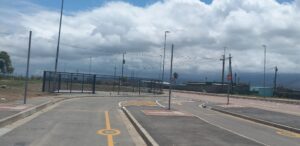
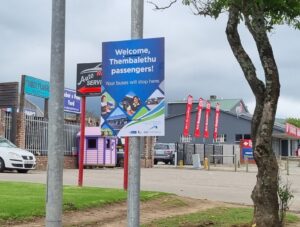 Posters at bus stops in town welcoming Thembalethu passengers; bus stops and operational facilities inside Thembalethu nearing completion; communication champions engaging with prospective passengers … These are but some of the visible signs that GO GEORGE is getting ready to roll out service to this community. Thembalethu has been waiting eagerly to share in the benefits of an affordable and scheduled bus service.
 Infrastructure

 “This rescue vessel is a must-have for surf sea rescue,” says the George Municipality’s Chief Fire Officer and Disaster Management, Cornelius Barnard. “The agility of the larger engine allows for faster response and movement in between the waves, the safety of the pontoon floating on top of the water increases the rescue capabilities of the Jetrib in shallow surf much more efficiently than what a normal or smaller rubber duck would provide.”